Chapter 1 · The Lab
Microbial Substrate Adaptation (Dormant Cultures Sourdough)
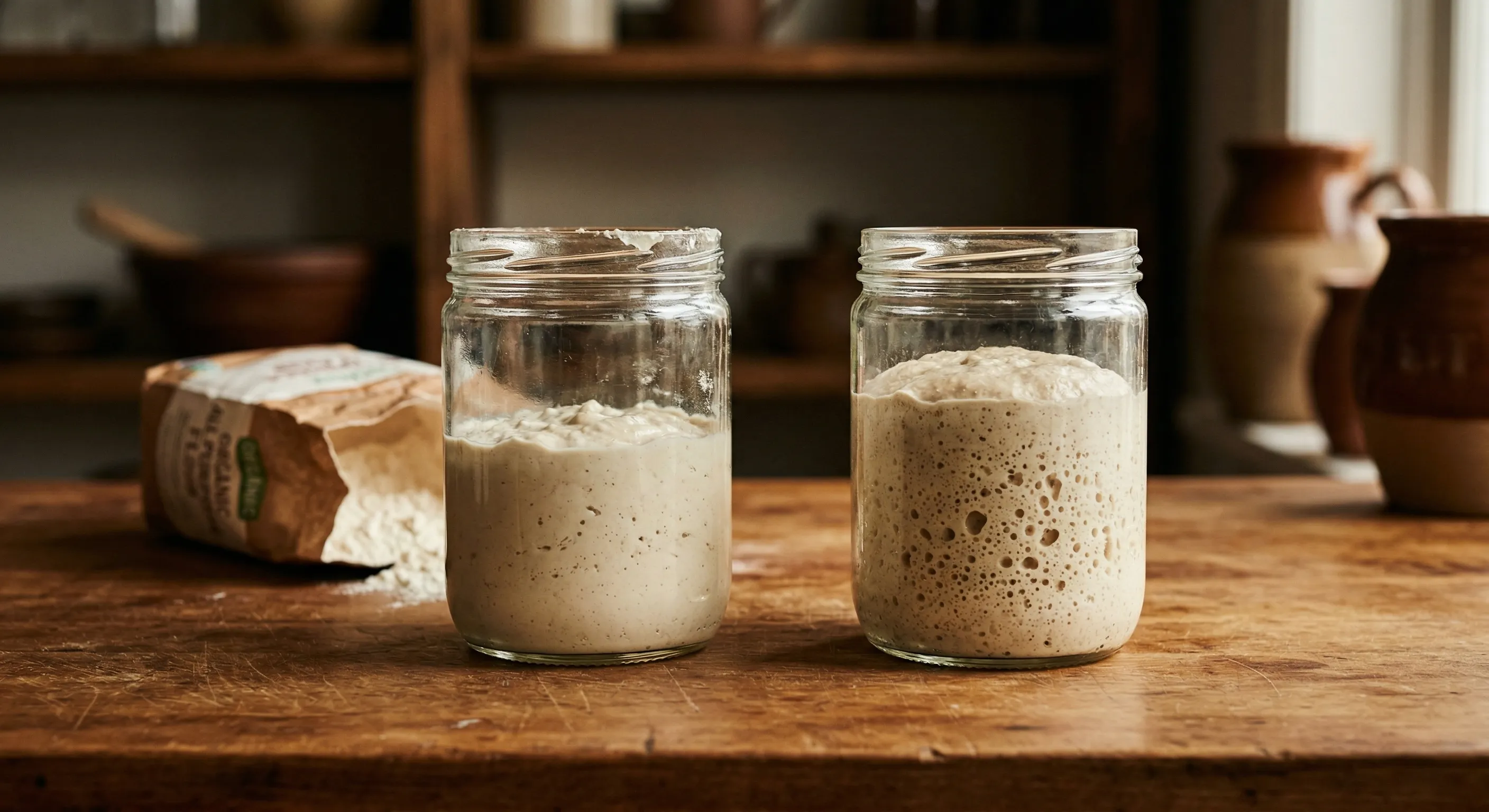
Concept Definition: A sourdough starter is not a single organism; it is a Stable Symbiotic Culture of Bacteria and Yeast (SCOBY). The powder in your packet contains dormant isolates of specific strains—likely Lactobacillus sanfranciscensis and a companion yeast like Candida milleri—that define the “San Francisco” profile. The flour you choose is not just ingredients; it is the substrate (environment) in which these microbes must wake up, colonize, and reproduce.
The Science: Competitive Exclusion & Enzymatic Activity To understand why the instructions explicitly specify All-Purpose Flour for the San Francisco variant, we must look at three biological factors:
- 1. The “Sterile” Start: White flour (All-Purpose or Bread) has had the bran and germ removed. This removes the majority of the natural wild yeasts and bacteria that live on the husk of the wheat berry.
- The Risk: Whole Wheat and Rye flours are teeming with their own aggressive wild microbes. If you introduce these “wild” competitors to your sleepy, dehydrated packet culture, the wild microbes (which are already active and adapted to that flour) will likely outcompete and consume the food before your “San Francisco” strain has a chance to wake up. You would essentially create a generic wild starter and lose the specific culture you paid for.
- 2. Acidity Profile (Acetic vs. Lactic):
- White Flour: Promotes homofermentative activity, leading to higher lactic acid production. This creates the creamy, yogurty sourness associated with SF sourdough.
- Rye/Whole Wheat: These contain higher levels of minerals (ash) and pentosans (complex sugars). This promotes heterofermentative activity, favoring acetic acid (vinegar-like sharpness). Using Rye immediately would fundamentally alter the flavor profile the manufacturer intended.
- 3. Enzymatic Velocity: Rye flour is extremely high in amylase (the enzyme that breaks starch into sugar). Fermentation happens significantly faster with Rye. A dehydrated culture needs time to rehydrate and repair cell walls (Lag Phase). If the enzymatic activity degrades the gluten network too fast (because of the Rye) before the colony is established, the structure will collapse, and the culture may become overly acidic (proteolytic) too quickly.
Practical Application: The Protocol
1. The Activation Phase (Steps 1–6)
- Verdict: Do not deviate from the instructions during the activation window.
- Why: You must establish colony dominance. Use the All-Purpose Flour (preferably organic, unbleached) as requested. This gives the specific San Francisco isolate a “clean” playing field to wake up and multiply without fighting a war against the wild yeast found on Rye or Whole Wheat hulls.
2. The Maturation Phase (Post-Activation)
- Verdict: Once your starter is bubbling reliably and doubling in volume (after the 3–7 day period mentioned in the instructions), you have a “healthy army.”
- Action: At this point, you can safely transition to a “feed” of 20% Rye / 80% AP or a Whole Wheat mix. The established SF colony will now be strong enough to dominate the new food source.
- Note: Adding Rye later is actually a great trick to boost activity if your starter becomes sluggish, as the extra nutrients act like “microbial steroids.”
Summary Answer If you use Rye or Whole Wheat now (to activate), you risk the wild yeast on the flour killing off the SF culture packet. Use AP Flour to wake it up. Use Rye/Whole Wheat blends to maintain it later if you desire a more sour, complex flavor.
Glossary
- SCOBY: A stable symbiotic culture of bacteria and yeast, the foundational element of a sourdough starter.
- Homofermentative: A fermentation process characterized by the primary production of lactic acid.
- Heterofermentative: A fermentation process resulting in the production of multiple organic acids, including acetic acid.
- Enzymatic Velocity: The rate at which enzymatic reactions occur, influencing the speed and efficiency of fermentation.
- Substrate: The environment or medium in which microorganisms, such as bacteria and yeast, thrive and reproduce.
- Competitive Exclusion: A biological phenomenon where one microorganism inhibits the growth of another by occupying a resource.
- Lag Phase: The initial period of microbial growth following rehydration, during which cells repair cell walls and establish a colony.